

UFNA Batana Hair Oil is a single-ingredient, raw hair treatment oil pressed from American oil palm nuts (Elaeis oleifera). My honest takeaway after studying the label, the Amazon listing, and independent reviews: it is a genuinely good conditioning and breakage-shield step, but it is not an overnight medical cure for hair loss. If you want softer, shinier, stronger-feeling hair with a simple routine, it deserves a look.
Our Editorial Rating: 4.2/5 ★★★★☆ | Amazon Customer Rating: 3.7/5 (39 global ratings)
| Score Category | Rating | Notes |
|---|---|---|
| Ingredient purity (single raw oil) | 4.6/5 | Minimal, cosmetic-grade formula |
| Price & value per ml | 4.3/5 | $25.85 for a 60ml bottle |
| Return guarantee (Amazon 30-day) | 4.5/5 | Free 30-day refund/replacement |
| Marketplace feedback | 3.7/5 | Loved for shine, not for medical regrowth |
Brush full of broken strands again? Edges looking thinner since your last pregnancy? You have probably already tried rosemary oil, biotin gummies, and a “repair” shampoo that changed nothing. That frustration is exactly why raw batana oil keeps trending. In this UFNA Batana oil review, I will separate what the oil can realistically do from what the hype claims. If you would rather see the live listing first, you can check the current price here.
What Is UFNA Batana Hair Oil, Really?
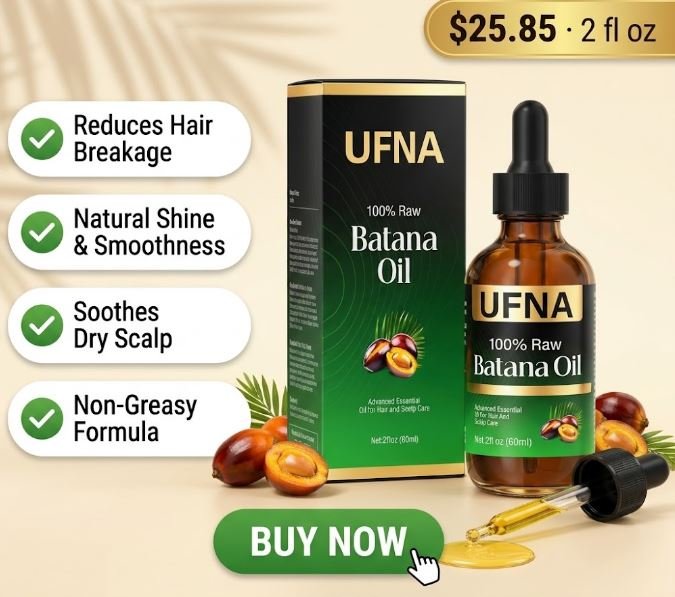
UFNA Batana Hair Oil is a topical cosmetic hair and scalp treatment sold in a 60ml (2 fl oz) amber dropper bottle. The brand states the oil is wild-harvested and cold-pressed, preserving the raw profile of the batana nut instead of refining it into a clear, odorless serum. On Amazon, it sits in the Hair Treatment Oils category, ships from Amazon, and is sold by AVEYA Stores.
The formula is deliberately minimal: 100% pure batana oil. There are no parabens, sulfates, silicones, or artificial fragrances added. Its natural scent is warm and roasted — often described as coffee-like — which comes from traditional nut processing. Many shoppers comparing one UFNA hair growth oil against another like this simplicity, because there is nothing hidden behind a fragrance blend.
It is important to understand that this is a cosmetic conditioner, not a medical treatment. It is marketed toward common cosmetic complaints:
- Dull and damaged hair that lost its light reflection
- Frizz and split ends from heat and styling
- Hair breakage during brushing and detangling
- Lack of hair volume and a flat appearance
- Dry, tight, or flaky scalp
What Is UFNA Batana Hair Oil?
Readers often type “what is UFNA batana hair oil” before trusting any bottle, so here is the origin story in plain words.
The American oil palm (Elaeis oleifera)
Batana oil comes from the nut of the American oil palm, a species native to Central and South America. Unlike the African oil palm used in cooking oil, this palm’s nut is prized for its rich, amber-colored fat profile.
From La Moskitia to your dropper
Indigenous communities in La Moskitia, Honduras have traditionally boiled and hand-press these nuts into a thick, earthy paste for hair and skin care. That Miskito hair tradition is the cultural root behind every modern batana product, including UFNA’s. Readers curious about the secret indigenous oils for extreme hair length secret indigenous oils for extreme hair length behind these traditions will find the full history in our dedicated guide.
Why “raw” and unrefined matters
Refining strips color, scent, and heat-sensitive compounds like carotenoids and tocotrienols. Raw, unrefined oil keeps them, which is why it looks deep amber and smells roasted. The trade-off is a thicker texture that needs warming before use.
How Does It Work on Your Scalp and Strands?
Marketing often skips the mechanism. Here is the plain version in three steps.
Step 1: Support the scalp barrier. The linoleic acid (omega-6) fraction helps support the scalp’s natural moisture barrier, which may ease dryness and flaking. A gentle scalp massage also adds physical stimulation, which many specialists associate with temporary local microcirculation support.
Step 2: Seal the hair cuticle. Each strand is covered in shingle-like cuticle cells. When those shingles lift, hair looks dull and frizzy. The oleic acid (omega-9) fraction softens the shaft and helps the cuticle lie flat, reflecting light and locking moisture inside.
Step 3: Shield against mechanical breakage. Lubricated strands snap less during combing, styling, and sleeping. Less breakage means existing length stays intact, so your hairline can look denser over time. This is length retention, not new follicle creation.
What UFNA batana oil hair growth claims really mean
When sellers mention UFNA batana oil hair growth, the honest reading is “growth support through less breakage and a calmer scalp.” No peer-reviewed trial proves topical batana oil reverses genetic thinning. Porosity matters here too: omega-9 gives low porosity hair penetration while omega-6 helps high porosity hair seal a leaky cuticle. We break down the best oleic acid and linoleic acid balance for hair porosity guide. Ready to see the bottle yourself? View today’s listing here.
UFNA Batana Hair Oil Ingredients:
The ingredient list is refreshingly short. Because nothing is added, every active compound below comes naturally from the nut itself.
Elaeis Oleifera (American Oil Palm) Nut Oil
The entire formula is cold-pressed, unrefined oil from the American oil palm nut. Keeping it raw preserves heat-sensitive compounds that refining strips away, and explains the thick, amber texture.
Oleic Acid (Omega-9)
Oleic acid is the dominant fatty acid here. It softens the hair shaft and helps the oil penetrate slightly rather than sitting on top, which is why dry, brittle ends feel smoother within a few uses.
Linoleic Acid (Omega-6)
Linoleic acid supports the scalp’s moisture barrier. A calmer barrier means less tightness and flaking, making this oil a sensible pick for a dry, uncomfortable scalp.
Vitamin E and Tocotrienols
Batana oil is naturally rich in vitamin E, including tocotrienols. These antioxidant compounds help protect strands and scalp from daily environmental stress and oxidative damage.
Natural Carotenoids
Carotenoids give the oil its golden-amber color and act as antioxidants, contributing to the oil’s traditional reputation for shielding hair from sun exposure.
What Is NOT in the Bottle
No parabens, sulfates, silicones, fillers, or artificial fragrance. That makes it a credible option for color-treated routines and for anyone avoiding synthetic smoothing agents.
Batana Oil Benefits:
Searches for Batana oil benefits usually end at the same short list, and the benefits UFNA Batana users report match it closely. Because this is a cosmetic oil, every benefit below relates to look, feel, and manageability.
- Fuller-looking density: The oil coats strands, so thin or patchy areas look visually thicker.
- Less shedding in the brush: Lubricated strands snap less, supporting better length retention.
- Frizz and split-end smoothing: A sealed cuticle tames flyaways and rough ends.
- Glass-like shine: Flat cuticles reflect light, reviving dull, damaged hair.
- Dry scalp comfort: Omega-6 support may ease tightness and flaking between washes.
- Edge and beard friendly: The same fatty acids soften coarse hair, which is why edge-care and beard routines adopt it.
- All-texture conditioning: It works as a pre-wash mask for 4C coils or a light sealant for fine straight strands.
- Color-safe routine partner: With no sulfates or silicones, it will not strip salon color.
If your routine already includes a growth support stack, this oil pairs well as the conditioning layer. See our guide on the Best Formula for Hair Growth for the internal side of that equation.

Is Batana Oil Good for Hair?
Is Batana oil good for hair? For most people seeking cosmetic improvement — yes, with realistic expectations. It is a rich emollient that smooths, shines, and protects strands, and independent reviewers agree its conditioning performance is solid.
Who it suits best
People with dry, coarse, curly, coily, color-treated, or heat-damaged hair tend to get the most from it. Anyone whose main complaint is breakage, frizz, or a tight, flaky scalp fits the profile well.
Who should skip it
If your goal is reversing bald spots, scarring alopecia, or hormonal thinning, this oil is not the right tool. Very fine, oil-sensitive hair may also find raw batana heavy unless dosed at two to three drops.
How to Use UFNA Batana Hair Oil:
Learning how to use UFNA Batana correctly matters more than any fancy technique, because over-application is the number-one cause of “greasy” complaints.
Step 1: Warm 3–5 Drops
Dispense 3 to 5 drops into your palms. Rub briefly to warm the oil; unrefined oil spreads far better slightly warmed. The dropper keeps waste low.
Step 2: Massage Into the Scalp
Massage gently for at least 2 minutes, focusing on the hairline and patchy zones. This doubles as a relaxing evening ritual.
Step 3: Leave In or Rinse
For daily care, leave the small dose in. For deeper repair, apply more as an overnight mask or 30-minute pre-wash treatment, then shampoo as usual.
Step 4: Repeat on a Schedule
Use 2 to 3 times weekly for maintenance. Consistency over 8 to 12 weeks is where visible texture and breakage improvements show up.
Struggling with snap-off ends between washes? Pair this routine with our Manage Hair Breakage Naturally guide. If you’re ready to try it, you can check the official listing here.
UFNA Batana Reviews and Complaints: What Buyers Say
Scrolling UFNA Batana reviews and complaints before buying is smart, so here is the honest split from the 39-rating Amazon pool and independent write-ups.
What buyers praise
Positive reviews cluster around cosmetics: noticeable shine within days, softer ends, calmer scalp, and easier detangling. Several users with 4C and curly hair mention better curl definition and less frizz in humid weather.
Common complaints
Negative reviews cluster around expectations: buyers hoping for rapid regrowth on bald spots report no change. A few mention the roasted scent, the thick texture, and confusion over sourcing details on the listing. Almost no complaints report irritation when patch testing was done.
Is UFNA Batana Legitimate? Our Honest Check
Is UFNA Batana legitimate? By the checks that matter, yes — with one transparency caveat. The product is a real Amazon listing with a visible seller (AVEYA Stores), a real 30-day return policy, and a single disclosed ingredient. There is no fake-review wall; the mixed 3.7/5 score is actually a healthy sign of genuine feedback.
The caveat: while the ingredient and tradition are Honduran, some listing details for UFNA variants have noted manufacturing outside Honduras, and independent reviewers flag this gap. So treat it as an honest cosmetic product with debated sourcing — not as a certified indigenous-harvest artifact, and not as a medical cure.
Safety: Side Effects and Who Should Patch Test
For most adults, topical use is well tolerated. The seller’s safety notes are clear: patch test first, external use only, avoid eyes, do not apply on broken skin, and keep away from children. If you are pregnant, nursing, or treating a child, consult a doctor first. Anyone with palm or nut sensitivities should patch test carefully on the inner arm for 24 hours.
One medical boundary deserves emphasis: cosmetic oils comfort the surface; they do not treat scarring conditions. If you are researching the best natural oils for cicatricial alopecia scalp care, read our guide and involve a dermatologist alongside any home routine.
Batana Oil for Hair Growth Before and After:
Searches for Batana oil for hair growth before and after photos set unrealistic expectations, so here is what actually changes, week by week, in honest user reports.
Weeks 1–2: Shine and softness
The first visible change is cosmetic: smoother feel, easier detangling, and a glossier finish under light. Scalp tightness often eases in this window.
Weeks 4–6: Less breakage
Users typically notice fewer snapped strands in the brush and shower drain. Ends feel less shredded, especially for heat-damaged hair.
Weeks 8–12: Density appearance
Edge fill-in and a fuller visual look appear here for consistent users — and for some, little changes at all. That variance is exactly why the 30-day return window matters.
Pros and Cons
| Pros | Cons |
|---|---|
| Single raw ingredient, no synthetic fillers | No clinical proof of medical regrowth |
| Non-greasy when dosed sparingly | Thick texture takes getting used to |
| Soothes dry scalp and seals the cuticle | Roasted scent is not for everyone |
| Color-safe, silicone- and sulfate-free | Sourcing origin (Honduras vs. manufacturing) debated |
| Free 30-day Amazon refund/replacement | Mixed 3.7/5 marketplace rating |
The 30-Day Guarantee: How Returns Work
Your safety net is Amazon’s policy: FREE 30-day refund or replacement, quick refunds often issued within 24 hours, and free return drop-off at thousands of locations. Subscribe orders can be canceled anytime from your account. Keep your order email until you are sure the oil suits your hair, because it speeds up any return request.
UFNA Batana Oil Price: What One Bottle Costs
The UFNA Batana Oil price on the verified listing is straightforward, with a small subscribe discount:
| Package | Price Per Bottle | Total Savings |
|---|---|---|
| 1 Bottle (60ml) one-time | $25.85 | – |
| Subscribe & Save | $24.56 | Save $1.29 |
At 3 to 5 drops per session, one 60ml bottle lasts most users several months, so cost per use stays around pennies. Compare live options here before checkout, since Amazon pricing can shift.
Where to Buy?
To keep your return rights, buy only through the verified Amazon listing linked in this review. Clone storefronts and social-media checkout pages sell look-alike amber bottles with vague origins, and marketplace fakes in this category are common. Check the brand name UFNA, the 60ml size, and the listed seller before paying anywhere.
FAQs About UFNA Batana Hair Oil
Q1: Does UFNA Batana oil really work for hair growth?
Ans: It supports length retention, not new follicles. Sealed cuticles and a moisturized scalp mean fewer snapped strands, so hair looks fuller over weeks. It will not reverse genetic thinning or bald spots, and no clinical trial claims otherwise. Expect conditioning results, not medical regrowth.
Q2: How long before before-and-after changes show?
Ans: Shine and softness appear in 1–2 weeks. Less breakage shows around weeks 4–6. Density appearance and edge fill-in follow the hair cycle at weeks 8–12. Timelines vary with porosity, texture, and consistency of use.
Q3: Is UFNA Batana legitimate or a scam?
Ans: It is a legitimate cosmetic product: real Amazon listing, disclosed single ingredient, and a working 30-day return policy. The caveats are debated sourcing details and zero clinical regrowth proof. Buy through the verified listing to keep your refund rights.
Q4: Will it make fine hair greasy?
Ans: Only if you over-apply. Fine hair needs 2–3 drops warmed between palms, focused on ends rather than roots. Start low, check the mirror after an hour, and add a drop next session only if the first dose absorbed fully.
Q5: Can I use it on color-treated or 4C hair?
Ans: Yes. With no sulfates, silicones, or fragrance, it will not strip salon color. Omega-9 penetrates low porosity strands while omega-6 seals high porosity cuticles, suiting 4C coils through fine straight hair. Patch test first.
Q6: Where can I buy genuine UFNA Batana oil?
Ans: Through the verified Amazon listing linked in this review, where the product ships from Amazon with the free 30-day refund policy. Avoid clone storefronts and social checkout pages. Confirm brand name, 60ml size, and seller before paying.
Disclaimers
FDA Disclaimer: These statements have not been evaluated by the Food and Drug Administration. This product is not intended to diagnose, treat, cure, or prevent any disease. It is a cosmetic hair conditioner, not a medical treatment for alopecia or hair loss.
Affiliate Disclaimer: This article contains affiliate links. If you purchase through these links, we may earn a commission at no additional cost to you. Pricing and return terms were accurate at the time of writing and may change — always confirm at checkout. Independent reviews and sourcing claims are based on publicly available marketplace data and third-party analysis.