
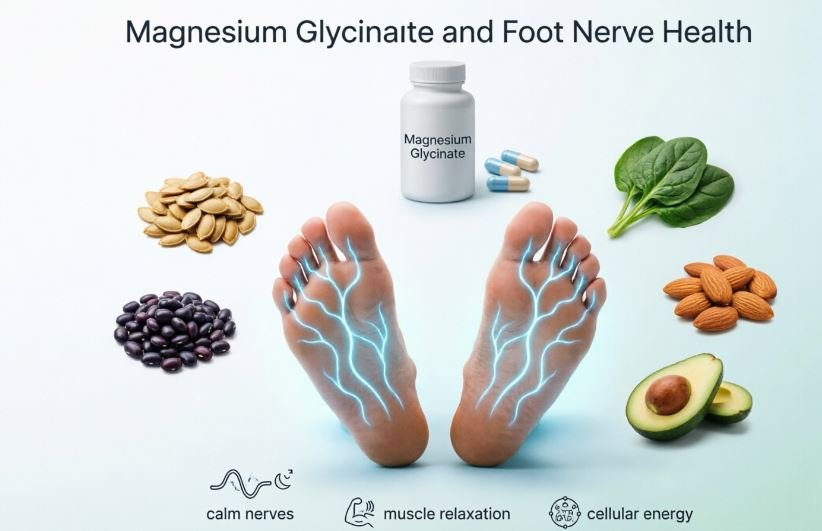
That pins-and-needles feeling in your feet can wake you at night. It can also make long walks feel uncomfortable. Many readers now search magnesium glycinate for tingling in feet because this gentle mineral form keeps appearing in nerve support formulas. Here is the honest takeaway up front. Magnesium supports normal nerve signaling, and low levels can contribute to neuromuscular irritability. Yet no supplement can promise to stop tingling for everyone, and diagnosed neuropathy needs medical care. This guide walks through causes, evidence, food sources, safe intake, and when to call a doctor.
Magnesium glycinate may support nerve signal balance and muscle relaxation, especially when dietary magnesium is low. Research links deficiency to tingling and cramps, but large trials on foot tingling specifically remain limited. Treat it as nutritional support, not a treatment.
What Is Magnesium Glycinate?
Magnesium glycinate is a chelated form of magnesium. The mineral is bound to glycine, a calming amino acid. This bond helps the mineral survive digestion and absorb steadily in the gut.
Most people tolerate it better than cheaper salts. Magnesium oxide often loosens the stomach, while glycinate rarely does. That makes it a common pick for daily, long-term use.
You will see it in capsules, powders, and nerve support blends. Label amounts usually quote elemental magnesium, so read the panel carefully before comparing products.
Why Feet Tingle: Common Causes to Understand First
Tingling, medically called paresthesia, has many possible triggers. Knowing the pattern helps you decide whether diet, habits, or a doctor visit comes next.
- Temporary pressure: crossed legs or tight boots compress small nerves for minutes.
- Repetitive strain: long standing or cycling irritates foot and ankle nerves.
- Cold exposure: narrowed blood vessels in low temperatures reduce circulation.
- Nutrient gaps: low magnesium or vitamin B12 can disturb nerve signaling.
- Blood sugar: years of elevated glucose can stress peripheral nerves.
- Thyroid and alcohol: both can contribute to nerve discomfort over time.
Occasional tingling after pressure is normal and fades quickly. A repeating nightly pattern deserves a closer look and possibly a simple blood test.
How Magnesium Supports Nerve Function
It Helps Regulate Nerve Signals
Nerves communicate using electrical impulses controlled by minerals. Magnesium acts as a natural gatekeeper at calcium channels. This gating helps nerves fire when needed and rest afterward.
It Supports Muscle Relaxation
Tight calf and foot muscles can compress nearby nerves. Magnesium works alongside calcium to manage muscle contraction and release. Relaxed muscles leave more room for healthy nerve gliding.
It Fuels Cellular Energy
Magnesium is a cofactor in hundreds of enzyme reactions. Many of these reactions produce ATP, the cell’s energy currency. Peripheral nerves are long and energy-hungry, so steady fuel matters.
What Research Says About Magnesium and Tingling
Science draws a clear line between deficiency and sufficiency. Low magnesium status is associated with neuromuscular irritability, including cramps, twitching, and tingling sensations. Correcting a deficiency often calms those symptoms over time.
Evidence for supplementing people with normal levels is thinner. Small trials in nerve discomfort populations show mixed outcomes, and study designs vary widely. No large, definitive trial proves this form eliminates foot tingling in everyone.
Government resources, including NIH fact sheets, confirm magnesium’s essential role in nerve transmission. They also note that many adults get less than the recommended amount from food alone. That gap is exactly why searches for magnesium glycinate for tingling in feet keep growing.
Who Is Most at Risk of Low Magnesium?
Some groups lose or absorb less magnesium than others. If you fit several categories below, your baseline worth checking.
- Adults over 60, because gut absorption declines with age.
- People managing type 2 diabetes.
- Regular alcohol consumers.
- Those with digestive conditions like Crohn’s or celiac disease.
- High-intensity athletes who lose minerals through sweat.
- Long-term users of diuretics or acid-reducing drugs.
A standard blood test plus an RBC magnesium test gives a clearer picture than symptoms alone.
Magnesium Glycinate vs Other Common Forms
| Form | Absorption | Stomach Tolerance | Often Chosen For |
|---|---|---|---|
| Oxide | Lower | Loose stools possible | Budget basics |
| Citrate | Moderate to good | Mild laxative effect | Constipation plus levels |
| Glycinate | Good | Very gentle | Nerve comfort and evening use |
| Malate | Good | Gentle | Muscle fatigue discussions |
| Threonate | Good | Gentle | Brain-focused research |
The best form is the one you can take consistently without side effects. For sensitive stomachs and nighttime routines, glycinate usually wins.
Reading Labels: Elemental Weight vs Compound Weight
Supplement panels can confuse new buyers. A capsule listing 1,000 mg of magnesium glycinate may deliver only around 100 to 140 mg of elemental magnesium. The compound weight and the mineral weight are not the same number.
Always compare products using the elemental figure. That is the amount your body can actually use. For context, one nerve blend we reviewed discloses 80 mg of elemental magnesium per capsule, which equals 19% of the daily value.
Food Sources That Raise Magnesium Naturally
Food remains the safest starting point. These everyday options carry meaningful amounts per serving.
- Pumpkin seeds: about 150 mg in one ounce.
- Cooked spinach: roughly 78 mg per half cup.
- Almonds: near 80 mg per ounce.
- Black beans: around 60 mg per half cup.
- Avocado: about 58 mg per fruit.
- Dark chocolate (70%+): close to 64 mg per ounce.
Pair these with whole grains and dairy for a steady baseline. Readers comparing food-first and supplement routes can continue here: Best Supplements for Nerve Health.
Safe Intake: Dosage Ranges and Limits
Adults need roughly 310 to 420 mg of total magnesium daily, depending on age and sex. That total includes food plus any supplement you add.
Health authorities set a supplemental upper limit at 350 mg of elemental magnesium per day for healthy adults. Staying under that line reduces the risk of diarrhea and nausea.
People with kidney disease should ask a doctor before supplementing. Impaired kidneys cannot clear excess magnesium efficiently.
Space magnesium away from certain antibiotics and osteoporosis medications by at least two hours. A pharmacist can check your specific list in minutes.
When Tingling in Feet Needs Medical Attention
Some signals should never wait for a supplement trial. Contact a clinician if you notice any of these.
- Numbness that spreads upward from the feet.
- New muscle weakness or foot drop.
- Balance changes or frequent stumbling.
- Sensations on only one side of the body.
- Slow-healing sores on the feet, especially with diabetes.
- Sudden tingling after a back or neck injury.
Early testing for B12, blood sugar, and thyroid function is simple and inexpensive. Supplements complement medical care; they never replace it.
Daily Habits That Support Nerve Comfort
Small routines reduce mechanical stress on foot nerves. None of these require special equipment or much time.
- Take movement breaks every hour of sitting.
- Choose shoes with roomy toe boxes.
- Check feet nightly for redness or pressure marks.
- Keep hydration steady and alcohol intake modest.
- Protect sleep, since repair happens overnight.
Our companion routine guide expands each habit in plain steps:
A Simple Six-Week Observation Plan
Tracking turns guesswork into information. Use this light framework to observe honestly.
- Week 0: write a baseline note on sensations, diet, and sleep.
- Weeks 1–2: add magnesium-rich foods first, before any pill.
- Weeks 3–4: if supplementing, keep the dose and timing steady.
- Weeks 5–6: compare notes and share them with your doctor if nothing changed or things worsened.
Where a Nerve Support Supplement Fits In
Many modern blends pair magnesium glycinate with complementary compounds. Alpha lipoic acid, B vitamins, turmeric curcuminoids, and CoQ10 target circulation and antioxidant pathways from different angles.
This multi-path design exists because nerve comfort rarely depends on one nutrient alone. A well-labeled formula simply bundles what food-first plans already aim for.
If you are comparing specific products, our full review covers ingredients, dosing transparency, pricing, and the refund window: NervoFlow Nerve Support Review – Ingredients, Price & Guarantee.