
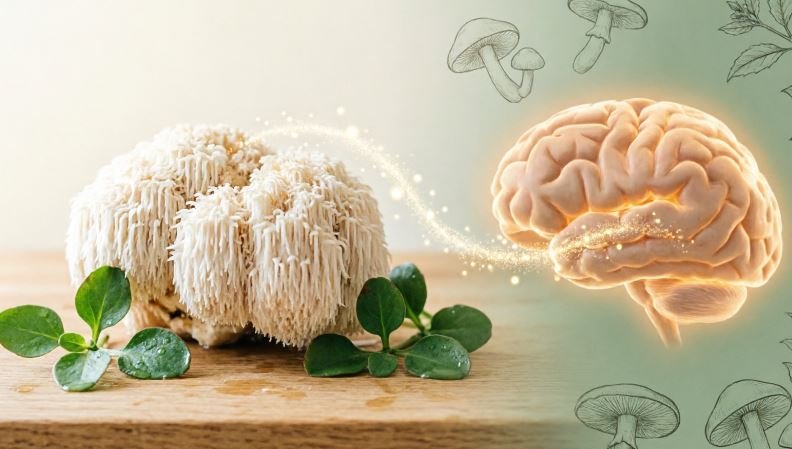
If you have started reading labels on cognitive health products, you have likely noticed mushroom names appearing next to traditional herbs and vitamins. This raises a very common question among those researching brain health: what are functional mushrooms for memory, and how do they differ from the mushrooms we cook with?
This guide provides a purely educational look at the biology, history, and current research surrounding functional mushrooms, specifically focusing on their role in cognitive support and how they compare to other botanical ingredients.
The Difference Between Culinary and Functional Mushrooms
To understand their role in brain health, it helps to separate culinary mushrooms from functional ones. Culinary mushrooms, like button or portobello, are primarily valued for their flavor, texture, and basic nutritional profile (like fiber and B vitamins).
Functional mushrooms, on the other hand, are species that contain unique bioactive compounds—such as specific polysaccharides, beta-glucans, and secondary metabolites—that researchers study for their potential interaction with human biology. In the context of cognitive health, the most heavily researched functional mushroom is Lion’s Mane (Hericium erinaceus).
The Science: How Mushrooms Interact with the Brain
When scientists study what are functional mushrooms for memory, they are primarily looking at how certain compounds cross the blood-brain barrier and interact with neural tissue. The brain is a highly complex organ that requires constant structural maintenance, and functional mushrooms are studied for their role in this process.
Nerve Growth Factor (NGF) Support
One of the most important proteins in the nervous system is Nerve Growth Factor (NGF). NGF is responsible for the growth, maintenance, and survival of certain neurons. As we age, or during periods of high oxidative stress, the brain’s natural maintenance processes can slow down. Laboratory studies suggest that specific compounds found in Lion’s Mane may help stimulate the synthesis of NGF, which is why it is frequently included in modern cognitive support routines.
Hericenones and Erinacines
The two primary classes of compounds studied in Lion’s Mane are hericenones (found in the fruiting body) and erinacines (found in the mycelium). Research indicates that erinacines, in particular, are small enough to cross the blood-brain barrier. Once there, they are studied for their potential to support neurogenesis—the creation and repair of neural pathways—which is a foundational process for learning and memory retention.
When looking at how these mushroom extracts are paired with other botanicals in modern daily routines, our Golden Brain Review breaks down a specific capsule format that combines fungal and herbal ingredients.
Lion’s Mane: The Most Studied Memory Mushroom
While reishi is studied for relaxation and cordyceps for physical energy, Lion’s Mane is the undisputed focus of memory and cognitive research within the fungal kingdom.
Historical Context in Traditional Medicine
Long before modern laboratories isolated hericenones, Lion’s Mane was used in traditional Chinese and Japanese medicine. Historical texts document its use by monks and scholars who consumed it as a tea or tonic to support focus during long hours of study and meditation. While traditional use does not replace modern clinical trials, it provides the historical foundation for why this specific mushroom was chosen for modern cognitive research.
What the Current Research Shows
Human trials on Lion’s Mane are still in their early stages compared to pharmaceutical research, but the existing data is promising. Small-scale, double-blind studies on older adults have observed that daily supplementation over several months may support cognitive function scores. However, researchers note that these effects are gradual and rely on consistent, long-term use rather than providing an immediate, stimulant-like effect.
How Functional Mushrooms Compare to Herbal Nootropics
A common point of confusion is how functional mushrooms differ from traditional herbal nootropics, such as bacopa monnieri traditional uses for memory support. While both are used in cognitive health, they operate through entirely different biological mechanisms.
Structural Support vs. Synaptic Support
- Functional Mushrooms (Structural): As mentioned, mushrooms like Lion’s Mane are primarily studied for structural support—helping the brain maintain and repair the physical neural networks via NGF.
- Herbal Adaptogens (Synaptic/Chemical): Herbs like Bacopa Monnieri or Panax Ginseng are typically studied for their effect on neurotransmitters and synaptic plasticity. For example, the active compounds in Bacopa (bacosides) are researched for their ability to improve the speed at which neurons communicate with one another, which directly impacts memory recall and information processing.
Because they work on different pathways, formulators often combine them. For a closer look at how traditional herbs are specifically formulated for recall and synaptic support, you can read our educational breakdown in the MemoFlow Review.
Understanding Extracts vs. Powders on Labels
If you are researching these ingredients, you will eventually need to read a supplement label. Understanding the terminology is crucial for knowing what you are actually looking at.
Fruiting Body vs. Mycelium
The “fruiting body” is the actual mushroom cap and stem that you see above ground. The “mycelium” is the root-like network that grows underground or inside the host material (like grain or wood). Hericenones are concentrated in the fruiting body, while erinacines are concentrated in the mycelium. High-quality extracts will often specify which part of the mushroom was used, or state that a full-spectrum extract (both parts) was utilized.
Extraction Methods
The human digestive system struggles to break down chitin, the tough cell wall of a mushroom. If a mushroom is simply ground into a raw powder, many of the beneficial compounds remain locked inside the chitin and pass through the body unabsorbed. Therefore, functional mushrooms must undergo an extraction process (usually using hot water or alcohol) to break down the chitin and make the bioactive compounds bioavailable.
We applied this exact label-reading method to evaluate ingredient transparency and extraction quality in our Neuro Recall Review.
Can You Get Cognitive Benefits From Eating Mushrooms?
A frequent question in nutritional science is whether dietary intake is enough. While adding culinary mushrooms to your diet is excellent for general health, gut microbiome support, and basic nutrition, it is very difficult to consume the concentrated levels of hericenones or erinacines required for targeted cognitive support through food alone.
Furthermore, Lion’s Mane is not commonly found in standard grocery stores, and when it is, the cooking process (high heat) can sometimes degrade delicate bioactive compounds. This is why standardized extracts are the preferred method in clinical studies and cognitive health routines.
Frequently Asked Questions About Mushroom Nootropics
Q1: What are functional mushrooms for memory, and are they stimulants?
Ans: Functional mushrooms are specific fungal species studied for their bioactive compounds, such as NGF-supporting hericenones. Unlike caffeine or synthetic stimulants that force temporary alertness by blocking adenosine receptors, functional mushrooms do not stimulate the central nervous system. They are studied for long-term structural and cellular support, meaning they do not cause jitters, heart palpitations, or afternoon energy crashes.
Q2: How long does it take for functional mushrooms to show effects?
Ans: Because functional mushrooms are studied for structural support and neurogenesis (the growth and repair of neurons), the process is inherently slow. Clinical observations and user reports suggest that it typically takes 4 to 12 weeks of consistent, daily use to notice subtle shifts in cognitive clarity or memory recall. They are considered a long-term wellness habit rather than a quick fix.
Q3: What is the difference between bacopa monnieri and lion’s mane?
Ans: They support the brain through different mechanisms. Lion’s mane (a functional mushroom) is primarily studied for structural support, specifically the stimulation of Nerve Growth Factor (NGF) to maintain neural pathways. Bacopa monnieri (an Ayurvedic herb) is studied for synaptic support, specifically how its bacosides improve the speed and efficiency of chemical communication between existing neurons.
Q4: Are functional mushrooms safe to take with other herbs?
Ans: In general educational literature, functional mushrooms like Lion’s Mane are considered highly tolerable and are frequently combined with adaptogenic herbs, amino acids (like L-Theanine), and vitamins in cognitive formulations. However, because everyone’s biology is unique, it is always recommended to consult with a healthcare provider before combining multiple concentrated botanical extracts, especially if you are taking prescription medications. To see how a full panel of these combined ingredients is evaluated for safety and transparency, check our Cognicept Review.
Q5: Why do some labels say “mycelium on grain”?
Ans: “Mycelium on grain” (MOG) refers to a cultivation method where the root system of the mushroom is grown on a bed of grain (like oats or rice), and the entire block—including the unseparated grain—is ground into a powder. This method is often debated in the mycology community, as it can result in a product that is largely starch from the grain rather than concentrated mushroom compounds. Educational resources usually recommend looking for extracts that specify “100% fruiting body” or liquid-cultured mycelium.
Educational Disclaimer: This article is strictly for educational and informational purposes. It is not intended to provide medical advice, diagnose, or treat any condition. The statements regarding functional mushrooms and herbs have not been evaluated by the Food and Drug Administration. Always consult a qualified healthcare professional before altering your diet or starting any new botanical supplement regimen.