
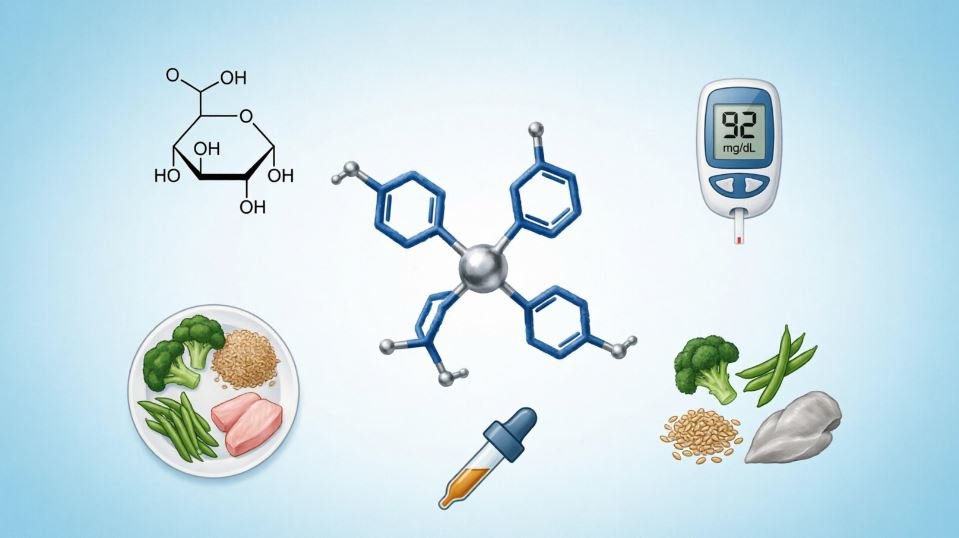
If you have ever read a metabolic support label, you have probably seen one mineral appear again and again: chromium. That raises a fair question — does chromium picolinate support healthy blood sugar, or is it just label filler? This guide explains what chromium is, what research suggests, and where the evidence stays thin, in plain English.
Key Takeaways
- Chromium picolinate is a well-absorbed form of an essential trace mineral
- It may help support normal insulin function and glucose metabolism
- Evidence for measurable blood sugar effects is mixed and modest
- Food sources remain the foundation; supplements are a complement
- Pair any formula with diet, movement, and professional guidance
Bottom line on does chromium picolinate support healthy blood sugar: modestly, as part of a bigger picture. It is a sensible supporting ingredient — not a magic switch.
What Is Chromium Picolinate?
Chromium is a trace mineral your body needs in very small amounts. It comes in two main forms: trivalent chromium the kind found in food and chromium picolinate, where chromium is bound to picolinic acid for better absorption.
Small amounts of chromium appear in foods like broccoli, green beans, whole grains, potatoes, and beef. Because the body uses it in tiny quantities, most people never think about it — until they start comparing blood sugar formulas.
How Chromium Works in the Body
Chromium’s best-known role is in macronutrient metabolism. It forms part of a compound called chromodulin, which may help insulin do its job more efficiently. Insulin is the hormone that moves glucose from your blood into your cells for energy.
When insulin signaling works smoothly, blood sugar tends to stay steadier after meals. That is why chromium is described as a mineral that may help support normal insulin function — a nutritional building block, not a treatment.
Chromium Picolinate vs. Other Chromium Forms
Picolinate is the most popular supplemental form because small studies suggest it absorbs better than chromium chloride. Other forms include chromium citrate and niacin-bound chromium.
The form mainly changes absorption, not the basic mechanism. Once inside the body, all forms supply the same trace mineral for the same metabolic role.
What Research Says About Chromium and Blood Sugar
So, does chromium picolinate support healthy blood sugar in a measurable way? The honest answer: the evidence is mixed.
Government fact sheets note that chromium contributes to normal carbohydrate, fat, and protein metabolism. Some small trials in people with low chromium status suggest supplemental chromium might support healthy glucose metabolism already within the normal range. Other, better-designed studies show little effect.
A few consistent patterns appear across reviews:
- Chromium status varies widely from person to person
- Any support tends to be modest, not dramatic
- Benefits show up mostly when paired with solid diet and activity habits
In short, chromium is a legitimate nutritional player in glucose metabolism, but it is not a stand-alone solution. That is exactly why supplement makers rarely use it alone.
Why Chromium Shows Up in Blood Sugar Formulas
In modern supplements, chromium picolinate usually plays the “anchor mineral” while botanicals handle other angles. Gymnema leaf is traditionally used for sweet-craving support, green tea extract adds antioxidant catechins, and adaptogens like maca may help with stress-related energy dips.
Liquid dropper formulas often pair chromium with these botanicals in one serving. For a real-world example, our complete review of one such liquid formula — Olivaro For Blood Sugar – Full Product Review — breaks down how chromium fits inside a six-ingredient blend.
Food First: Where to Get Chromium Naturally
Before supplements, consider the plate. Broccoli, grape juice, whole grains, garlic, basil, and lean meats all contribute small amounts of chromium. A diet rich in whole plant foods usually covers the trace amounts most adults need.
True chromium deficiency is uncommon and hard to measure, which is one reason supplement responses vary so much between individuals. Supplements work best as a complement, not a replacement, for consistent meals. More diet-side ideas live in our guide on How to Manage Blood Sugar Naturally.
Safety, Typical Doses, and Who Should Be Careful
Chromium picolinate is generally well tolerated at common supplemental amounts, and serious issues are rare when used as directed. More is not automatically better.
A few sensible precautions:
- People taking glucose-lowering medication should talk with a doctor first, since combining the two could push readings lower than expected
- Anyone with kidney or liver conditions should get professional guidance before supplementing
- Pregnant or nursing women should not self-prescribe trace mineral supplements
Always read the full label of any formula, because chromium rarely travels alone — botanicals like green tea or guarana add natural caffeine that some users need to factor in.
FAQs About Chromium Picolinate
Q1: Does chromium picolinate support healthy blood sugar?
Ans: It may help support normal glucose metabolism, especially in people with low chromium status. Research is mixed, so expect modest nutritional support — not a treatment — paired with healthy meals and activity.
Q2: What foods contain chromium?
Ans: Broccoli, green beans, whole grains, potatoes, beef, garlic, and grape juice all provide small amounts. A varied whole-food diet usually covers daily trace needs for most adults.
Q3: When is the best time to take chromium?
Ans: Most labels suggest taking it with a meal, often in the morning. Consistency matters more than timing, since trace minerals build support gradually over weeks.
Q4: Can I take chromium with other supplements?
Ans: Usually yes, and many formulas already combine it with gymnema or green tea. If you take prescription medication, especially for glucose, confirm with your doctor or pharmacist first.
Disclaimer: This article is for educational purposes only. These statements have not been evaluated by the Food and Drug Administration, and nothing here is medical advice or a substitute for professional care.